
Home » Contact Center Solutions » How the FCC’s “Strengthening Call Blocking” Order Will Impact the ARM Industry
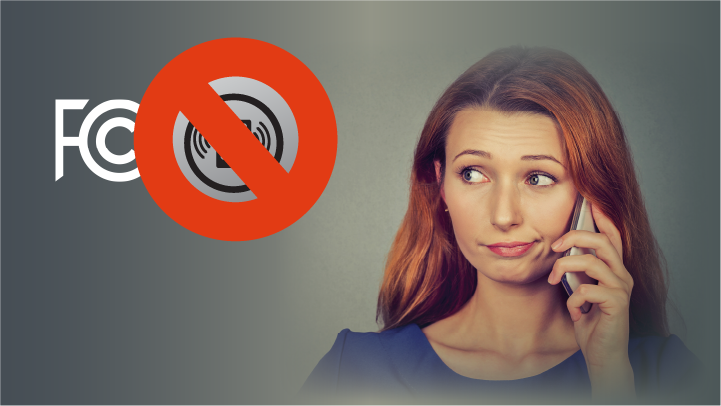
The FCC’s new call blocking order introduces stricter compliance requirements for all voice service providers, including businesses that rely on outbound calling. Under this rule, every provider in the call path must block calls from numbers flagged on a Do-Not-Originate (DNO) list, and callers must receive clear notification when their calls are blocked. This change is designed to reduce fraudulent robocalls, but it also means that businesses must ensure their outbound calls comply with new blocking and authentication standards to avoid unintended disruptions.
For companies using legacy contact center solutions or outdated dialers, this rule presents a significant challenge. Without the ability to properly handle SIP Code 603+ for call blocking notifications, businesses risk higher call rejection rates and disruptions to customer engagement. Outbound calls flagged by providers’ analytics could be mistakenly blocked, leading to missed opportunities, customer frustration, and lower conversion rates. Businesses that fail to adapt to these requirements may find their calls going unanswered or blocked altogether.
To stay compliant and maintain high call connection rates, businesses must ensure their technology aligns with FCC-approved call authentication and blocking measures. Now is the time to evaluate outbound calling solutions and migrate to a compliant contact center platform that integrates advanced call verification, redress mechanisms, and real-time blocking notifications. By proactively upgrading dialers and working with providers that support robust call authentication, businesses can protect their outbound operations, enhance customer trust, and avoid regulatory penalties in this evolving landscape.
Previous Rule:
The requirement to block calls based on a Do-Not-Originate (DNO) list previously applied only to gateway providers (those handling international call traffic entering the U.S.).
New Requirement:
Now, all U.S.-based voice service providers in the call path—including originating, intermediate, and terminating providers—must block calls that originate from numbers on a reasonable DNO list.
.
DNO List Definition
The DNO list includes numbers that should never make outbound calls, such as:
Key Impact on Providers
New Notification Requirement: SIP Code 603+ for Blocked Calls
Previous Rule:
When a call was blocked based on analytics, providers were required to notify callers using Session Initiation Protocol (SIP) codes 603, 607, or 608.
New Requirement:
The FCC now requires the exclusive use of SIP Code 603+ for notifying callers when their calls are blocked due to analytics-based filtering.
Implementation Deadline & Impact to Providers
Providers have 12 months from the publication of the order in the Federal Register to transition to SIP Code 603+.
No Mandate for a Standardized DNO List, But It Must Be “Reasonable”
Previous Rule:
The FCC had not mandated a single uniform DNO list but allowed providers to develop and maintain their own lists.
New Requirement:
Providers must use a “reasonable” DNO list, which:
No Mandate for a Standardized DNO List, But It Must Be “Reasonable”
The FCC has chosen not to mandate a single, central DNO list but instead allows providers to maintain their own reasonable lists.
Providers are encouraged to use more comprehensive lists, but they are not required to include every possible unused or unallocated number.
No Immediate Mandate for Caller Name (CNAM) Display
Consumer Protections & Transparency for Blocked Calls
Regulation FHealthcare Billing
P2PE (Point-To-Point Encryption)Auto & Predictive Dialing
Stealth Voicemail
Statements & LettersPayment Portals
A pro-business regulatory shift could be a game-changer for the debt collection industry, unlocking unprecedented growth potential. However, agencies must act swiftly and strategically to capitalize on this short window of opportunity. With
Intelligent Contacts’ state-of-the-art solutions, your agency will be ready to scale revenue operations, outperform competitors, and achieve 2X growth in 2025.
Let’s prepare for this new era together—because the future of collections belongs to those ready to innovate and lead.
Let's discuss how proactively upgrading dialers and working with providers that support robust call authentication, businesses can protect their outbound operations, enhance customer trust, and avoid regulatory penalties in this evolving landscape.
A leading third-party accounts receivables company was searching for a more profitable way to engage consumers with special discounts and settlement offers.Is your company missing its' revenue numbers and you have no idea why? Well-defined KPIs allow owners to measure and track the underlying operational objectives critical to business success.
Enjoying this article?
Share it with the world!






Transactions processed
Service Uptime
Faster Resolution and Payment Cycles



Get instant access and explore the platform at your own pace
Click Michael or Alissa below and allow microphone access. Speak naturally — they respond just like a live agent.
💡 No response? Make sure your browser microphone is enabled and speakers are on.
We use cookies to personalize content, provide features, and analyze our traffic. You can change your preferences at any time. For more information, please see our Privacy Policy and Cookie Policy. Privacy Policy