
Most advice about HIPAA compliant patient communication starts with the wrong question: “Which texting tool should the organization buy?” A signed BAA and a HIPAA-capable channel matter, but they don't make the workflow safe by themselves.
The exposure often appears after the message leaves the approved channel. A reminder may create an EHR note, feed an analytics dashboard, sync with billing, or enter an export handled by a system that wasn't included in the original review. Patient communication is therefore an end-to-end governance problem, not a channel-selection checklist.
That distinction matters across healthcare revenue cycle teams, patient billing operations, contact centers, and care coordination workflows. Communication failures affect privacy, but they also affect continuity and safety. Healthy People 2030 reports that 11.7% of U.S. adults in 2023 said they had poor communication with their health care provider, compared with 8.9% in 2017, on the same measure. The Joint Commission study cited in industry reporting found that 80% of serious medical errors resulted from miscommunication during patient handovers, which makes controlled communication a patient-safety issue as well as a compliance obligation. Healthy People 2030's health communication measure provides the relevant context.
A secure messaging tool can protect a message while it's being sent. It can't automatically govern every place that message goes afterward.
Consider a routine appointment reminder. The outbound text contains minimal information and follows the organization's channel policy. The patient replies, a staff member records the exchange in the EHR, a reporting tool pulls the conversation metadata, and a billing workflow copies the interaction into a customer record. Each handoff creates another access point, retention decision, and vendor-management question.
A serious review follows the data, not just the text. Operations leaders should document:
Creation: Which system generates the message, and what patient fields does it access?
Transmission: Which channel carries the communication, and what safeguards protect it?
Response: Where do patient replies arrive, and who can view them?
Documentation: Does the exchange become part of the designated record?
Export: Do EHR, billing, CRM, reporting, or workforce systems receive a copy?
Retention and deletion: How long does each system retain the content and metadata?
Escalation: What happens when a patient introduces clinical detail into an administrative conversation?
The most common failure isn't necessarily a careless initial text. It's an approved message entering a system with broader permissions, weaker logging, unclear retention, or no appropriate business associate controls.
Practical rule: A communication workflow isn't compliant merely because its first channel is compliant. Every downstream system must be included in the risk review.
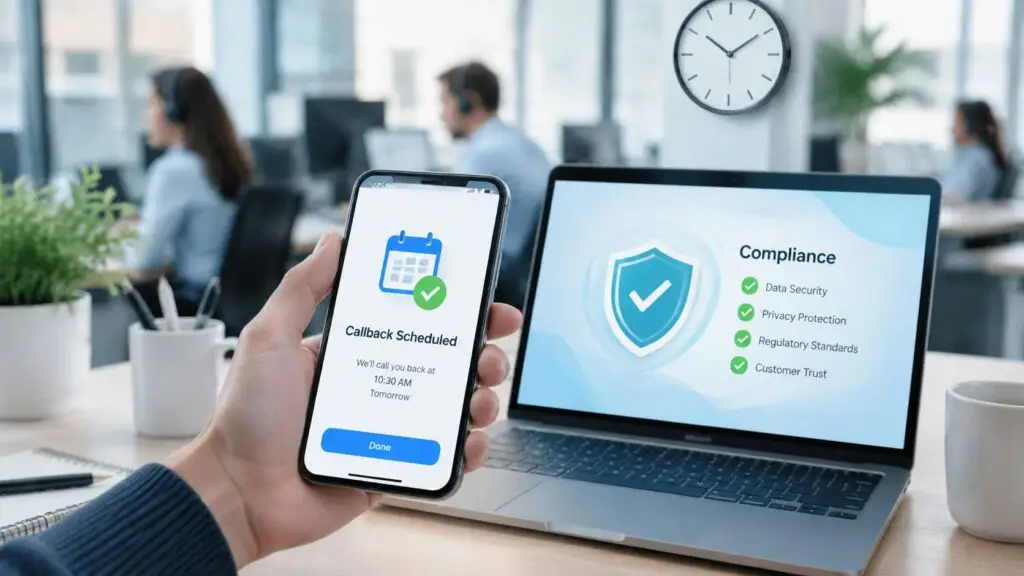
That requires a documented architecture review covering encryption, identity verification, role-based access, audit logs, opt-outs, consent records, integrations, and vendor responsibilities. A security review of contact center security controls can help operations teams evaluate those controls as one connected environment rather than as isolated features.
A patient might receive a scheduling text, answer a billing question by phone, complete a payment through a portal, and receive a follow-up email. If each interaction lives in a separate vendor stack, the organization must reconcile permissions, records, and audit trails across every step.
That is why policy owners should define approved workflows by purpose, data sensitivity, system destination, and escalation path. Channel selection remains important, but it's the starting point, not the control framework.
HIPAA compliance becomes easier to manage when teams connect each rule to an operational decision. The framework is not a prohibition on electronic communication. It sets conditions for using, disclosing, protecting, and documenting protected health information.
Congress established HIPAA's baseline legal framework for protected health information when it passed the law on August 21, 1996. The HIPAA Privacy Rule became effective on April 14, 2003, and the Security Rule became effective on April 21, 2005. The HHS overview of the HIPAA Privacy Rule provides the regulatory foundation for these requirements.

The Privacy Rule governs how covered entities use and disclose PHI, including the minimum necessary principle. The Security Rule addresses electronic PHI through administrative, physical, and technical safeguards. Communication policies should translate those broad obligations into specific rules for SMS, email, voice, portals, payment conversations, and documentation.
The HITECH Act was signed on February 17, 2009. It expanded HIPAA's scope by introducing breach notification, extending obligations to business associates, and strengthening enforcement. Financial penalties began on February 17, 2010.
The HIPAA Omnibus Final Rule was published on January 25, 2013, became effective on March 26, 2013, and required compliance by September 23, 2013. For operations teams, the practical effect is clear: a vendor that creates, receives, maintains, or transmits PHI on behalf of a covered entity cannot be treated as a neutral communications utility.
Treatment, scheduling, billing, care coordination, and marketing aren't interchangeable. The marketing rule contains important exceptions. A communication isn't marketing when it describes a health-related product or service provided by, or included in a plan of benefits of, the covered entity making the communication. The rule also excludes case management, care coordination, and communications directing or recommending alternative treatments, therapies, providers, or care settings. HHS guidance on the HIPAA marketing rule explains those distinctions.
Patient-initiated contact adds another layer of judgment. HIPAA doesn't categorically prohibit SMS, and guidance recognizes that providers may communicate electronically when reasonable safeguards are applied. If a patient starts a text exchange, the organization still needs rules for identity, minimum necessary disclosure, escalation, and documentation.
The right operating question is: What purpose does this message serve, what PHI does it contain, and what safeguards govern every system it touches?
Healthcare organizations also have affirmative duties, not only restrictions. Under the Privacy Rule, covered entities must provide individuals access to their PHI, provide an accounting of disclosures when requested, and disclose PHI to HHS when the rule requires it. HHS's HIPAA laws and regulations overview outlines those obligations.
For hospitals and clinics retiring devices or storage media, secure disposal belongs in the same governance model. A resource on HIPAA-compliant IT disposal in Boston offers useful context for the physical end of the data lifecycle.
A channel policy should answer more than whether a message can be sent. It should define which content belongs in which channel, what patient preference has been recorded, and when staff must move the interaction elsewhere.
SMS is useful for low-risk logistics, such as appointment reminders, confirmation requests, and prompts to contact the office. Routine texts should stay under about 160 characters and avoid PHI, according to HHS guidance on educating patients about electronic communication. HHS's patient communication guidance also supports minimum-necessary content, identity verification, business associate controls, audit logs, encryption, and periodic retraining.
| Message type | Recommended channel | PHI risk level | Key safeguard |
|---|---|---|---|
| Appointment reminder or confirmation | SMS | Low | Keep it administrative, brief, and free of clinical detail |
| Lab result, diagnosis, or treatment instruction | Patient portal or secure messaging | High | Require authenticated access and document the exchange |
| Billing or payment discussion | Verified voice or secure payment workflow | Medium to high | Verify identity, limit disclosure, and protect payment data |
| Prompt to review a secure message | Email or SMS notification | Low | Put the sensitive content behind a protected login |
| Patient reply containing clinical detail | Secure messaging or live verified call | High | Escalate out of the basic SMS workflow |
| Office closure or callback request | SMS, voice, or voicemail | Low | Avoid details that could disclose care or condition |
A message such as “Please confirm your appointment” carries less exposure than a message naming a diagnosis, medication, or test result. Staff should use templates that direct patients to call the office or log into a portal when the conversation becomes clinically specific.
Patient preference matters, but it doesn't erase the need for safeguards. A patient may prefer SMS, yet the organization still needs to minimize content, verify identity where appropriate, document consent, honor opt-outs, and route high-risk information to a secure channel.
HHS states that providers may communicate with patients by email when reasonable safeguards are applied. NIH-based clinical guidance also recommends using only the bare minimum information, checking addresses carefully, and encrypting email when appropriate.
Email is often safer as a notification layer than as the container for detailed PHI. A short prompt to log into a secure portal reduces exposure from forwarding, shared inboxes, and misaddressed messages.
There are no HIPAA rules for text messaging when a patient initiates contact by text, but that doesn't mean staff should answer every question with unrestricted detail. The response should acknowledge the request, avoid unnecessary disclosure, verify identity when needed, and move sensitive discussion into a protected workflow.
The policy should include a simple escalation trigger: if the patient's reply introduces clinical, payment, or identity-sensitive information, stop treating the thread as routine SMS.
Consent is not a permanent permission slip. It's a documented, channel-specific preference that can change, narrow, or be revoked.
A reliable workflow records what the patient agreed to receive, through which channel, for what purpose, and how the organization will handle a change. Staff should be able to see that information before sending a message, not after a complaint.
A useful consent record includes the patient's preferred channel, the categories of communication permitted, the risks explained for less secure channels, the date and source of consent, and the process for revocation. It should also record opt-outs and confidentiality requests in a location accessible to scheduling, billing, clinical, and contact center teams.
Consent management guidance for healthcare workflows can help teams assess whether preference records are visible and actionable across departments.
The distinction between operational communication and marketing also matters. Treatment, payment, appointment, and care coordination communications should be governed by their purpose. Marketing communications require separate analysis, including the applicable exceptions and authorization requirements.

Record the request. Capture the patient's chosen channel and the stated purpose.
Review the channel. Confirm that the requested medium fits the sensitivity of the planned message.
Document the decision. Store consent, restrictions, and any risk acknowledgment in the appropriate record.
Check for revocation. Suppress outreach immediately when the patient changes preferences or opts out.
Preserve the audit trail. Retain evidence of consent, changes, sends, access, and escalation.
That loop should operate for provider-initiated communication and patient-initiated contact. A patient's request for informal communication deserves respect, but staff still need a documented boundary around what can be disclosed there.
Identity verification should be proportionate to the risk. A scheduling confirmation may need less friction than a discussion of a balance, medication, or clinical result. The policy should tell staff what information can be discussed after each verification step and what must move to an authenticated portal.
Family and caregiver communication requires the same discipline. HIPAA permits communication with family members, friends, or others involved in care or payment when the patient is present and doesn't object, or when the patient is absent or incapacitated and the provider uses professional judgment to conclude disclosure is in the patient's best interests. In every case, disclosure must be limited to PHI directly relevant to that person's involvement. HHS guidance on family and caregiver communication sets out those conditions.
Auditors typically want evidence that the process works in practice. That means readable records, consistent suppression of revoked channels, documented identity checks, and staff who can explain what happens when a patient changes preferences.
The most overlooked failure occurs after the approved send. A compliant message can become a compliance problem when its content, transcript, metadata, or attachment flows into a system with different controls.
Operations teams should create a data-flow map for each communication type. The map should identify the originating application, transport path, storage location, integration endpoint, user groups, reporting destination, and deletion process.
Common downstream destinations include:
EHR notes: Conversation logs may become part of the patient record, expanding access and retention obligations.
Analytics dashboards: Message content or metadata may appear in reports viewed by users who don't need PHI.
Billing systems: A payment-related conversation can connect health information with financial records.
CRM exports: Staff may download transcripts into spreadsheets or local files without equivalent safeguards.
Third-party integrations: A vendor may receive PHI through an integration even though the original channel review focused only on the messaging provider.

A dashboard may not display the message body, yet a patient identifier, appointment category, callback reason, or campaign label can create a meaningful inference about care. The same applies to exports that combine communication records with payment status, insurance information, or clinical scheduling.
A safer design limits what each downstream system receives. Analytics may need aggregate operational data rather than raw transcripts. Billing may need a documented interaction status rather than clinical detail. EHR documentation should follow defined rules for what becomes part of the record and who can edit it.
A secure message is not the end of the data lifecycle. It's the point where governance must continue.
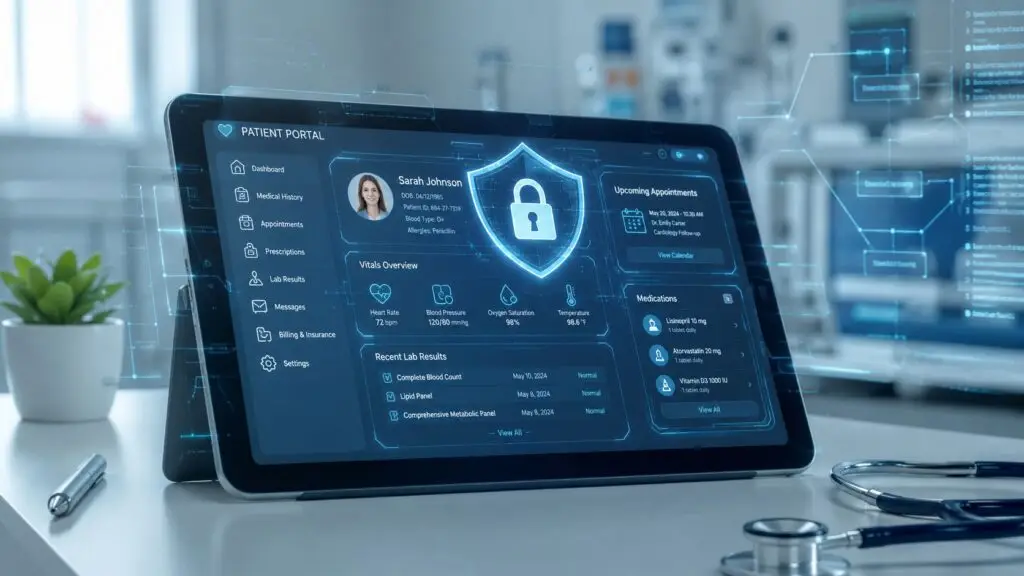
Before enabling an integration, teams should confirm whether the recipient is a covered entity or business associate, whether a BAA is required, how access is controlled, how activity is logged, and whether the destination supports retention and deletion policies. HIPAA-compliant patient portal guidance is relevant when secure patient interactions need to connect with intake, records, and follow-up workflows.
Governance reviews shouldn't stop at successful delivery. Test misdirected messages, duplicate patient records, failed integrations, unauthorized exports, staff role changes, and patient opt-outs after a campaign has already been scheduled.
The highest-risk conditions are often identity mismatch, unencrypted PHI, and weak access controls. OCR investigates breaches affecting 500 or more individuals, and HHS maintains a public breach portal. That enforcement environment makes traceability essential, even when the organization believes a workflow is low risk.
Separate vendors create separate control planes. Voice may have one access model, SMS another, email a third, and payments a fourth. When those systems exchange patient data, the organization must stitch together permissions, encryption, retention, audit logs, incident response, and BAAs.
That work is possible, but it's fragile. Each integration seam creates a place where a field can be copied too broadly, a user can retain access after changing roles, or an audit trail can stop at the vendor boundary.
A unified platform can reduce those seams by keeping communication, records, routing, and payment workflows under a consistent governance model. It doesn't eliminate the need for policies or configuration, and it doesn't make every workflow automatically compliant. It can, however, give administrators one place to manage roles, logs, consent status, and escalation rules.
For healthcare revenue cycle teams, the benefit is especially practical. A patient may begin with an appointment reminder, ask about an account, and require a protected payment interaction. A fragmented stack forces staff to move between systems and creates more opportunities for duplicate records, screen switching, and unlogged handoffs.
A serious vendor review should ask:
Who built the system? In-house control can reduce dependency on an unexamined reseller chain.
Where does PHI move? Require a clear data-flow diagram for every integration.
How are payments separated? Payment workflows should protect financial data without exposing unnecessary health information.
Can roles be enforced centrally? Access should reflect job function and minimum necessary use.
Are audit logs complete? Logs should cover sending, receiving, viewing, editing, exporting, and administrative changes.
Can consent and opt-outs control automation? Suppression should operate across every applicable channel.
What happens during escalation? Staff need a secure path when a routine message becomes sensitive.
Intelligent Contacts is one example of a unified contact center and payments platform built in-house rather than assembled from third-party tools. It supports voice, SMS, email, chat, self-service payments, access controls, and compliance workflows in one environment, with integration paths for EHRs, billing systems, CRMs, and custom software.
The right architecture is the one the organization can explain, monitor, and audit. A larger vendor list isn't automatically safer, and a unified platform isn't automatically sufficient. The deciding factor is whether the design keeps the full patient communication workflow visible.
Most communication failures come from ordinary shortcuts. Staff use a consumer texting application because the approved workflow feels slow, a patient's channel preference sits in a form nobody checks, or a vendor BAA remains in procurement files while the vendor's product and subcontractors change.
HHS permits electronic communication when reasonable safeguards are applied, while NIH-based clinical guidance emphasizes bare-minimum email content, correct addresses, and encryption. OCR's investigation threshold for breaches affecting 500 or more individuals makes weak controls difficult to dismiss as a minor operational issue.
Consumer channels: Personal texting and email accounts can lack access controls, retention rules, and audit logs.
Unscoped consent: “The patient agreed to texts” doesn't explain whether that permission covers billing, scheduling, or clinical detail.
Patient-initiated over-disclosure: A patient's opening message doesn't authorize staff to send sensitive information back through the same channel.
Unmanaged vendors: A BAA is not a one-time procurement artifact. Vendor access, subcontractors, integrations, and incident procedures need ongoing review.
Incomplete records: If staff can't prove what was sent, who accessed it, and when preferences changed, the workflow won't hold up well under scrutiny.

Technical controls: Confirm encryption, authentication, role-based access, session controls, export restrictions, and audit logging.
Policy controls: Review the content-by-channel matrix, minimum-necessary rules, identity verification standards, escalation paths, opt-out handling, and confidentiality requests.
People controls: Check whether scheduling, billing, clinical, and contact center staff receive role-specific training and periodic retraining. Test whether staff know what to do when a patient replies with sensitive information.
Vendor and data-flow controls: Inventory every system receiving message content or metadata. Verify BAAs, access rights, retention, deletion, incident response, and integration behavior.
The final test is operational: select a real message and trace it from creation through delivery, reply, documentation, export, reporting, and deletion. If the team can't account for every handoff, the workflow still has a governance gap.
Intelligent Contacts brings compliant voice, SMS, email, chat, and payment workflows into one unified contact center and payments platform, with clear integration paths for healthcare billing and EHR environments. Visit Intelligent Contacts to schedule a demo, map a patient communication workflow, and evaluate where unified controls can reduce downstream compliance gaps. Intelligent Contacts
SOC2 Type II Certified, PCI-DSS Level 1 Certified, HIPAA-HITECH Certified, FISMA Compliant, GDPR Compliant
Systems are built to be fully TCPA, FDCPA, FCRA compliant
99.999% guaranteed uptime
CCPA/CPRA Compliant
FEDRAMP Compliant
GLBA Compliant
PIPEDA Compliant Contact Center
WCAG 2.1 Compliant
STIR/SHAKEN Compliant