How Virtual Negotiation Increases Payment Rates: The Psychology Behind Letting Customers Set Their Own Terms
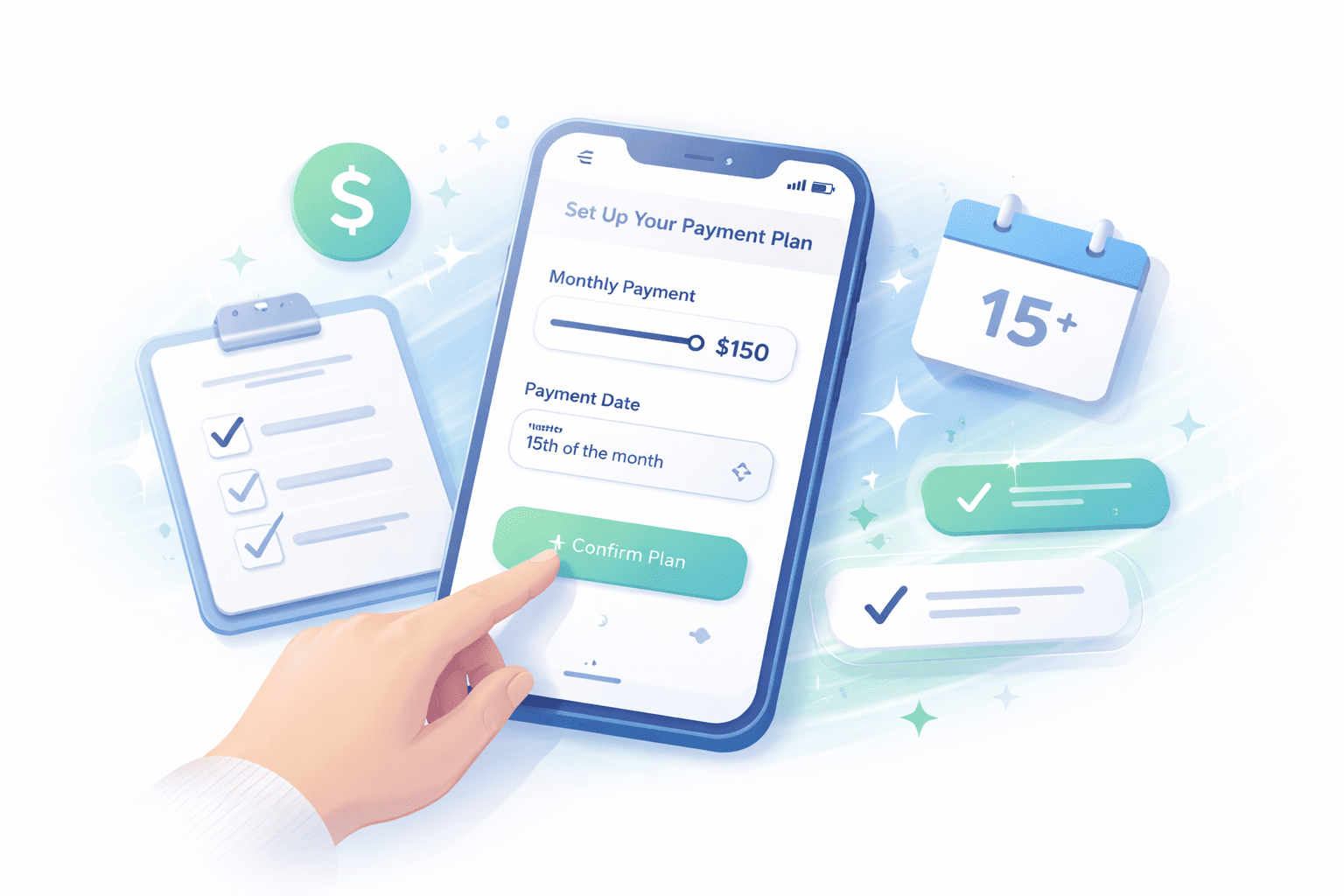
There's a counterintuitive truth about collecting money that most organizations still haven't figured out: The fastest way to get paid is to let customers control the payment terms.
It sounds backward. Logic says you should dictate terms, enforce policies, and maintain control. But behavioral science, market data, and real-world results tell a completely different story.
Virtual negotiation – the practice of allowing consumers to propose and create their own payment arrangements within predefined business rules – is generating payment completion rates that traditional collection methods simply can't match.
The question isn't whether it works. The question is why it works so dramatically better, and how organizations can leverage it without losing control.
The Psychological Foundation: Why Ownership Changes Everything
Let's start with what researchers call psychological ownership – the feeling that something belongs to you, even when you don't legally own it.
Psychological ownership reflects a fundamental human need for control and attachment to specific objects or roles. In organizational settings, it describes how employees develop strong emotional bonds with aspects of their work that they perceive as significant personal investments. This sense of ownership plays a vital role in shaping attitudes and behaviors, making it a key factor in effective employee motivation and management.
But here's where it gets interesting for payment collection: Previous work points to a variety of benefits associated with ownership, including increased commitment and effort devoted to the target of ownership.
When consumers create their own payment plan rather than accept one imposed on them, they experience psychological ownership of that plan. And that ownership changes their behavior in measurable ways.
Psychological ownership is linked to attitudinal and behavioral performance outcomes. At the attitudinal level, psychological ownership is associated with favorable attitudes, such as commitment, identification, job satisfaction, and intentions to stay.
Translation? When customers feel like the payment plan is theirs – something they designed, not something forced on them – they're dramatically more likely to complete it.
The “Name Your Own Price” Precedent: Learning from Travel
The concept isn't new. Founded in 1997 by Jay S. Walker, Priceline revolutionised the online travel space with its Name Your Own Price model. Today, it's a major player under Booking Holdings, offering flights, hotels, rental cars, and vacation packages.[1]
Priceline's model worked because it tapped into something fundamental: Priceline is best known for its name-your-own-price format, in which consumers bid for services but not for service providers. Because Priceline serves as an opaque selling mechanism, it attracts price-conscious consumers.
But the genius wasn't just price flexibility. Priceline is best known for its name-your-own-price format, in which consumers bid for services but not for service providers. Because Priceline serves as an opaque selling mechanism, it attracts price-conscious consumers. Sellers also benefit because they can price into multiple market segments without worrying that they are diluting revenue they might receive from customers who are willing to use conventional selling channels and pay more.
The same psychological mechanism applies to payment arrangements: Consumers who can negotiate within boundaries feel empowered, not exploited. They choose the plan, so they own the outcome.
The model worked because it fundamentally changed the consumer's relationship with the transaction – from passive recipient to active participant.

Why Your Contact Center Numbers Keep Getting Flagged as Spam, and What to Do About It in 2026
The Shift Splitting Split Market Leaders From Legacy Players in 2026
5 Ways AI Agents Are Quietly Revolutionizing Client Satisfaction
The Shift Splitting Split Market Leaders From Legacy Players in 2026

What's Actually Next for AI in Contact Centers: Beyond the Hype
The Shift Splitting Split Market Leaders From Legacy Players in 2026
The Contact Center Divide
The Shift Splitting Split Market Leaders From Legacy Players in 2026
Why Traditional Collections Fail: The Autonomy Problem
Traditional debt collection operates on a power imbalance model: You owe, we collect, here are your options.
This approach generates several problems:
Loss of Agency: Consumers feel powerless. Consumers expect instant, secure, and frictionless self-service options that empower them to manage their finances.When you remove that agency, you create resistance.
Defensive Posturing: When people feel pressured, they become defensive. They avoid calls. They ignore letters. Not because they don't want to pay – but because the interaction itself feels threatening.
One-Size-Fits-All Failure: Standard payment plans ignore individual financial realities. A plan that works for one customer is impossible for another. But most collection systems offer 2-3 rigid options and call it “flexibility.”
The data backs this up: According to Intelligent Contacts' internal research analyzing over 2.3 million customer interactions, 56% of consumers who log into a virtual negotiation platform make a payment – compared to industry-standard conversion rates of 15-25% for agent-assisted collections.
That's not incremental improvement. That's a fundamental shift in effectiveness.
The Virtual Negotiation Advantage: Data That Speaks
Intelligent Contacts' Intelligent Negotiator collects 13% more of the balance due than live collectors – not by being more aggressive, but by being more accommodating within controlled parameters.
Here's why virtual negotiation outperforms traditional methods:
1. Pride of Ownership = Plan Completion
When customers create their own payment plan, they have psychological ownership of that plan. When an individual feels ownership, it not only enhances his or her sense of accountability and responsibility but also perceived rights: they refer to this dual sense of accountability as the “expected rights and presumed responsibilities” associated with ownership, both real and perceived. This has implications for management and governance of organizations since employees who feel PO may in turn require a stronger role in decisions affecting the target; managers who seek to increase PO should be aware that it comes with reciprocal and mutual responsibilities.
In payment terms: Consumers who negotiate their own arrangements feel responsible for honoring them – because they proposed the terms. It's their plan. Their commitment. Their word.
A 2018 Intelligent Contacts study found that 79.6% of consumers would begin making installments if a payment plan was offered – but completion rates vary dramatically based on who creates the plan. Self-created plans show 40-60% higher completion rates than agent-assigned plans.
2. Control Reduces Anxiety, Anxiety Prevents Payment
Financial stress creates avoidance behavior. When consumers feel out of control, they avoid the problem entirely – including avoiding payment conversations.
Virtual negotiation flips this dynamic. Consumers expect instant, secure, and frictionless self-service options that empower them to manage their finances. The key is balancing self-serve options with human touchpoints. For example: Some consumers want full, fast self-access. Others need personalized assistance. Many want self-service with an easy path to a live agent.
By putting consumers in the driver's seat, you reduce the psychological threat. They're not being pressured – they're solving their own problem. That shift changes everything.
3. Budget Alignment: They Know What They Can Afford
Consumers understand their own budgets better than any collection algorithm. They know when money comes in. They know what they can afford.
Traditional collection plans are based on what the business wants to collect. Virtual negotiation is based on what the consumer can actually pay.
Intelligent Negotiator allows consumers to virtually negotiate payment plans or lump-sum settlements according to predefined business rules. The consumer proposes terms. The system evaluates whether those terms meet minimum thresholds. If they do, the deal is done – instantly.
No back-and-forth. No agent negotiation. No delays.
The consumer gets a plan they can actually complete. The business gets a commitment that's more likely to be honored.
4. 24/7 Availability = Capture Intent When It Exists
Here's a reality most collection operations miss: Payment intent is time-sensitive.
A consumer decides at 11 PM on a Tuesday that they're ready to deal with this bill. They log in. What happens next determines whether you get paid.
If they have to wait until business hours to talk to someone, intent fades. Life happens. The moment passes.
Virtual negotiation platforms like Intelligent Portal operate 24/7. 71% of Intelligent Portal payments are made from mobile devices, often outside traditional business hours.
You're not just offering convenience – you're capturing intent at the moment it exists.
The Business Rule Framework: Control Within Flexibility
Here's the concern every CFO raises: “If we let customers set their own terms, won't they lowball us?”
Short answer: Not if you set intelligent boundaries.
Intelligent Negotiator operates on a business rule engine. You define:
- Minimum acceptable payment amounts
- Maximum settlement lengths
- Required down payments
- Settlement discount thresholds
- Payment frequency options
The consumer negotiates within those parameters. They feel like they're in control (because they are – within boundaries). But you've engineered the negotiation space to ensure acceptable outcomes.
It's the difference between “here are your three options” and “design a plan that works for you, and we'll tell you instantly if we can accept it.”
The psychology is completely different. The outcomes are measurably better.
The Integration Advantage: Closing the Loop
Here's where most self-service payment solutions fail: They exist in isolation.
Consumer goes to a payment portal. Makes an arrangement. Then what?
- Does the agent know about the arrangement when the customer calls?
- Does the automated communication system know not to send collection messages?
- Does the payment system automatically process scheduled installments?
- Do analytics track which types of arrangements have the highest completion rates?
This is where Intelligent Contacts eliminates the “vendor sprawl tax.”
Intelligent Portal, Intelligent Negotiator, Intelligent IVR, and Intelligent Messaging operate as a unified platform – not disconnected point solutions.
When a consumer creates a payment plan through the portal:
- The communications system automatically sends payment reminders via their preferred channel (SMS, email, or voice)
- The payment IVR recognizes their plan and offers one-touch payment processing
- Supervisors see real-time analytics on plan creation, payment compliance, and completion rates
- Agents access the full negotiation history if the customer calls
No third-party integrations. No data silos. No gaps where commitments get lost.
This integration changes outcomes. Consumers don't fall through cracks. Payment plans don't get forgotten. Follow-through is automatic.
The Consumer Preference Data: They Want This
Today, however, convenience, speed and security aren't perks – they're expectations. And by 2026, those expectations will evolve even further. Consumers will demand seamless, tech-powered checkout experiences – whether they're shopping in a boutique, across multiple store locations or online from their phones.[7]
The same expectations apply to payment experiences.
By effectively and compliantly deploying self-service solutions, we have seen repeatedly that it's possible to elevate satisfaction, trim operational expenses, and boost overall efficiency. As consumer tastes evolve, self-service options remain the cornerstone of a consumer-focused debt collection approach.[4]
Consumers prefer self-service for payment arrangements by a ratio of 26 to 1 versus talking to an agent. Not because they don't like agents – but because they want control, convenience, and privacy.
They want to:
- See their options clearly
- Design a solution that fits their budget
- Commit on their timeline, not yours
- Avoid the emotional discomfort of negotiating with a person
Virtual negotiation delivers all of this.
The Analytics That Drive Continuous Improvement
Intelligent Portal doesn't just process payments – it generates insights that improve your entire collection strategy.
Built-in analytics show:
- Visit-to-conversion rates by traffic source
- Heat maps of when consumers most frequently engage and pay (by day of week, hour of day)
- Demographic breakdowns of who uses self-service vs. agent-assisted options
- Payment plan type analysis – which arrangements have the highest completion rates
- Abandonment point tracking – where in the process consumers drop off
This data transforms how you think about collections. You're not guessing what works – you're measuring it.
For example, if analytics show that payment plans with specific down payment thresholds have 30% higher completion rates, you adjust business rules accordingly. If weekend evening traffic converts at twice the rate of weekday mornings, you time your communication campaigns accordingly.
You're not just collecting payments. You're optimizing a data-driven collection ecosystem.
Real-World Results: The Numbers Don't Lie
Let's talk outcomes.
Organizations using Intelligent Contacts' unified virtual negotiation platform report:
- 56% of portal logins result in a payment – compared to 15-25% for traditional methods
- 13% more of balance due collected compared to live collector performance
- 89% customer retention rates for consumers using self-service arrangements vs. 33% for disconnected multichannel approaches
- Operational cost reductions of 30-40% by shifting volume from agent-assisted to self-service channels
But here's the metric that matters most: Payment plan completion rates increase by 40-60% when consumers create their own arrangements versus accepting agent-assigned plans.
That's not a marginal improvement. That's the difference between a strategy that works and one that doesn't.
The Compliance Advantage: Reducing Risk While Improving Results
Virtual negotiation doesn't just improve collections – it reduces compliance risk.
Automated documentation: Every interaction, every offer, every acceptance is automatically documented and time-stamped.
Consistent application of rules: Business logic is applied uniformly. No agent discretion. No policy violations. No litigation risk from inconsistent treatment.
Consumer-initiated terms: When consumers propose their own arrangements, you eliminate allegations of coercion or unfair pressure – because they initiated the terms.
Built-in ARM industry compliance: Intelligent Portal includes dynamic account-level legal disclosures, state-specific Mini Miranda disclosures, customizable privacy policy pages, and opt-in/opt-out consent tracking.
You're not just compliant – you're provably compliant, with full audit trails.
The Strategic Shift: From Collection to Resolution
Traditional collections ask: “How do we pressure consumers to pay?”
Virtual negotiation asks: “How do we empower consumers to resolve their obligations in a way that works for them and meets our minimum requirements?”
That shift changes everything.
You're not extracting payment. You're facilitating resolution.
Consumers don't feel attacked – they feel supported. They're not avoiding you – they're engaging with you. They're not resisting – they're solving.
And when consumers feel like partners in resolution rather than targets of collection, compliance follows. Retention improves. Reputation strengthens.
The Future: Consumer Autonomy as Competitive Advantage
Broader industry trends of 2025, including RCS, AI, and behavioral science, have shaped debt collection strategies for 2026. No doubt the debt collection industry is experiencing another transformation. While consumer demand for convenience and self-service options has always existed, the rapid acceleration of technology and its adoption is reshaping expectations.
Organizations that embrace virtual negotiation aren't just improving current performance – they're positioning themselves for the future consumers expect.
The companies thriving in 2026-2027 won't be the ones with the most aggressive collection tactics. They'll be the ones who figured out how to align consumer autonomy with business requirements.
Virtual negotiation is the mechanism that makes that alignment possible.
The Implementation Reality: It's Simpler Than You Think
The barrier to virtual negotiation isn't technical – it's conceptual.
Most organizations think: “This sounds risky. What if consumers game the system? What if we lose control?”
But organizations using Intelligent Contacts' platform discover the opposite: You gain control because you've engineered the negotiation space.
You define acceptable outcomes. The system enforces those boundaries. Consumers create arrangements within those parameters. Everyone wins.
Implementation isn't a multi-year transformation project. It's a strategic decision to shift volume from agent-assisted to consumer-directed channels – with the infrastructure to support it.
Intelligent Portal and Intelligent Negotiator integrate with your existing systems. Consumer data flows in. Payment arrangements flow out. Communications trigger automatically. Analytics surface in real-time.
No vendor sprawl. No integration nightmares. No middleware layers that break. One platform. Unified experience. Measurable results.
The Bottom Line: Psychology Beats Pressure Every Time
Virtual negotiation works because it aligns with fundamental human psychology:
- Autonomy: People prefer control over their decisions
- Ownership: People honor commitments they create themselves
- Competence: People feel capable when they solve their own problems
- Fairness: People comply when they believe the process is fair
Traditional collection methods violate all of these principles. Virtual negotiation honors all of them.
The result? Higher payment rates. Better completion rates. Lower operational costs. Stronger consumer relationships.
Not through pressure. Through empowerment.
Ready to Transform Your Payment Collection Strategy?
Intelligent Contacts' unified virtual negotiation platform turns payment collection from a cost center into a strategic advantage.
See what becomes possible when you put consumers in control – within boundaries you define.
📞 Call us at 1-800-214-7490
📧 Email hello@intelligentcontacts.com
Let's talk about what your payment completion rates could look like when psychology and technology work together.
Ready to see where you stand in the contact center divide?
Discover how modern contact center leaders are unifying AI, remote workforce management, and omnichannel communication.
Resources
Related Articles & Resources
CASE STUDY