A contact center leader already knows the script. The caller says they just need to make a payment, update an address, check a balance, dispute a bill, or get account details. The agent can't move forward until identity is verified. Then the call slows to a crawl.
The agent asks for a date of birth, an address, the last four digits of something, maybe a security question set years ago, maybe a mother's maiden name the caller never chose and barely remembers. The caller gets one answer wrong, the agent repeats the prompt, the queue gets longer, and a simple interaction turns into a compliance-sensitive mess.
That's why voice biometrics authentication matters. In regulated contact centers, it isn't just another security feature. It's an operational control. When it's deployed correctly, it shortens the path to verification, reduces dependence on weak knowledge-based authentication, and creates a cleaner handoff into payment, servicing, or protected account discussion. When it's deployed badly, it creates false confidence, privacy risk, and escalations that land right back on operations.
A collections call is a good example because the pressure is immediate. The agent reaches the right person, but can't discuss the account until identity is confirmed. The customer is impatient. The agent is trying to avoid a misstep under the FDCPA. The call opens with friction instead of resolution.
The same pattern shows up in healthcare revenue cycle. A patient calls about a balance, wants to understand charges, maybe wants a payment plan. Before anyone discusses billing details that connect to protected health information, the contact center has to verify identity in a way that holds up under HIPAA expectations. The old method is usually a stack of personal questions that are easy to forget, easy to guess, or easy to obtain elsewhere.
It slows the call. Every extra question adds seconds, and those seconds pile up across a high-volume queue.
It creates weak security. Personal facts aren't secret in the way many organizations still pretend they are. Shared devices, breached records, social media, and family access all make knowledge-based authentication less reliable than policy documents suggest.
It frustrates legitimate customers. The person on the line knows who they are. Being forced through a memory test before getting help feels unnecessary, especially when the issue is urgent.
Practical rule: If a verification process makes good callers work harder without meaningfully stopping bad callers, it's an operational liability.
There's another problem that doesn't get enough attention. Agents start improvising when authentication workflows are clumsy. They paraphrase questions, skip a step under pressure, or accept partial matches because they're trying to keep the call moving. That's where compliance risk enters. Not in the policy manual, but in the gap between policy and real behavior.
Most regulated environments don't need theatrical security. They need repeatable verification that works inside live call flows.
That means a method that can:
Voice biometrics authentication addresses that problem when the deployment is built around operations first. The primary win isn't that it sounds advanced. The win is that it can verify a caller while they're already speaking, instead of forcing the agent to stop the conversation and run a manual identity drill.
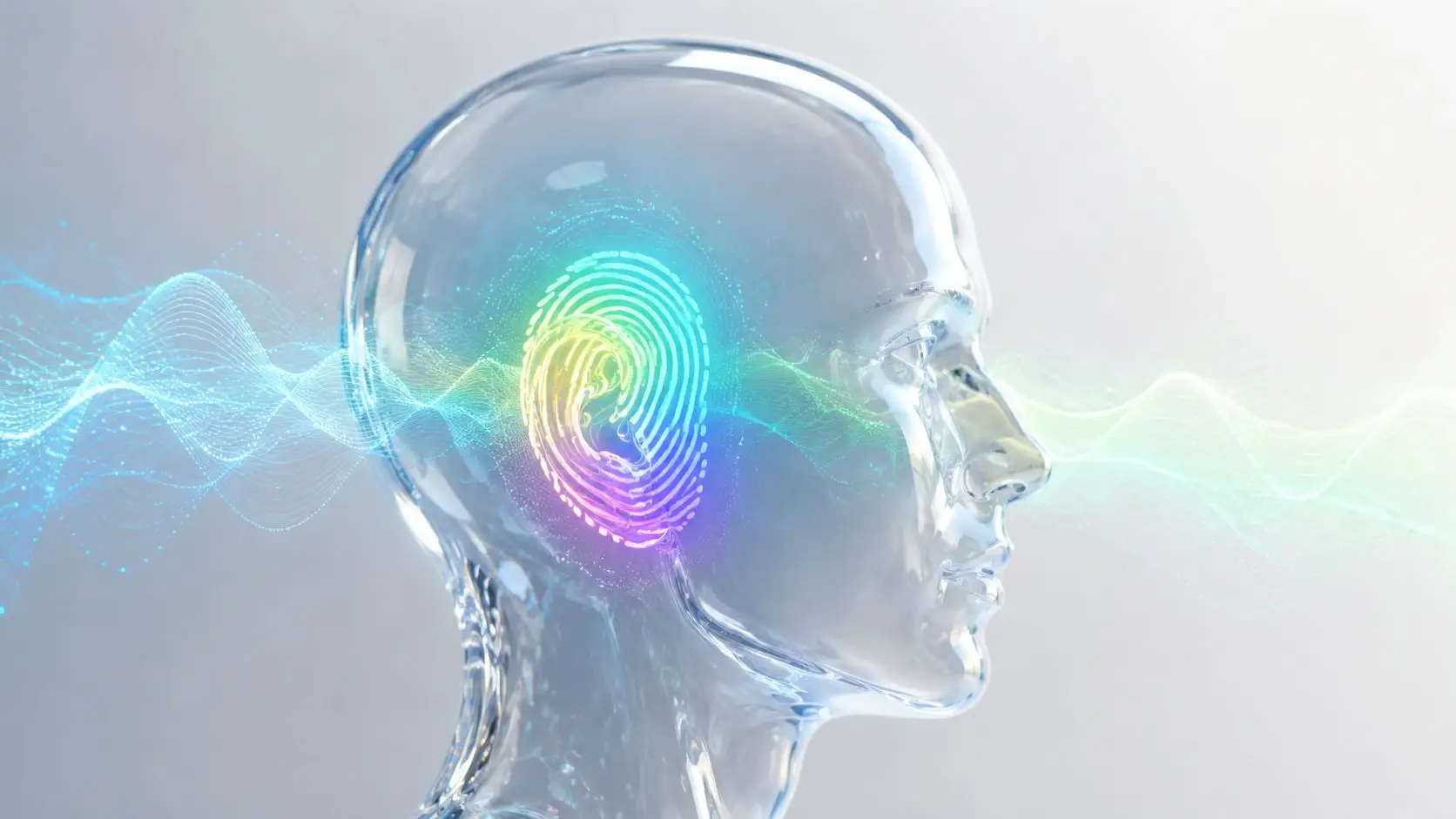
Voice biometrics authentication involves turning speech into a numerical voiceprint during enrollment, then compares future speech against that stored template to verify identity. Systems can be text-dependent, where the caller says a specific phrase, or text-independent, where authentication happens from natural speech during the interaction. The underlying engine may analyze 100+ features such as pitch, tone, cadence, pronunciation, and speech patterns, as described in this overview of voice biometrics systems and voiceprint creation.

Enrollment is the setup step. The system captures a sample of the caller's voice and builds the reference voiceprint that later calls are checked against.
That sample isn't stored as a simple audio clip for playback. The platform extracts measurable vocal characteristics and stores a template designed for comparison. Operationally, that matters because teams need to think about consent, storage rules, retention, and what happens when a customer wants to re-enroll or opt out.
On future calls, the system compares live speech against the stored voiceprint.
If the match clears the threshold, the caller is treated as verified. If it doesn't, the workflow needs a fallback path. Good programs plan those fallback steps early. Bad programs leave agents to guess what to do with a mismatch.
A simple way to think about it is this:
| Mode | How it works | Operational upside | Operational downside |
|---|---|---|---|
| Text-dependent | Caller says a fixed passphrase | Easier to control and script | Adds friction and requires explicit cooperation |
| Text-independent | System evaluates natural conversation | Less interruption, better caller experience | Needs stronger tuning for real-world call variability |
The biggest operational shift came when passive methods became practical. Phonexia notes that passive voice biometric authentication can identify a speaker after only a few seconds of natural conversation and can shorten authentication by more than 30 seconds per average call in the right environment, while NICE describes systems that analyze over 100 unique voice features including tone, pitch, frequency, pronunciation, and inflection in this guide to passive voice authentication and voice features.
That matters in contact centers because the best authentication step is often the one the caller barely notices. If the system can listen while the customer explains why they called, the agent doesn't need to stop the interaction just to run identity checks.
Teams that are evaluating spoofing risk or synthetic audio risk should also spend time on verifying audio authenticity, especially when call recordings, escalations, or disputed interactions are part of the fraud review process.
There's also a useful connection between authentication and downstream call analysis. When identity and speech data live in the same operational ecosystem, supervisors can tie verification outcomes to QA, disputes, and agent behavior. That's one reason speech analytics in compliant contact centers matters beyond coaching.
Strong voice biometrics authentication doesn't remove the need for workflow design. It makes workflow design more important.
Most vendors talk about accuracy as if it's one number. Operations teams know better. The critical question isn't whether the system is “accurate.” Instead, it's about its behavior when the line is noisy, the caller is sick, the sample is short, and reliability is paramount.
False Acceptance Rate (FAR) is how often the system lets the wrong person through.
False Rejection Rate (FRR) is how often it blocks the right person.
Equal Error Rate (EER) is the balancing point used to tune sensitivity, where false accepts and false rejects meet.
Those definitions matter because every deployment has a trade-off. Tighten the threshold to reduce impostor risk and more legitimate callers may fail verification. Loosen the threshold to reduce friction and the fraud team may inherit a bigger problem.
A useful way to frame it for operations is this:
Academic and vendor-neutral coverage makes an important point that many sales conversations skip. Voiceprints may be unique, but system performance still depends on feature extraction, noise removal, and thresholds, and public material rarely quantifies outcomes across accent, language, and channel quality in enough detail for operators to make assumptions safely, as discussed in this review of voice variation, thresholds, and real-world voice biometrics conditions.
That shows up on the floor in familiar ways:
Anyone managing speech systems should also understand broader SpeakNotes insights on accuracy, because the same operational realities that affect transcription quality often show up in authentication performance too.
A voice biometrics program should be measured like any other production process, not treated as a black box.
| What to monitor | Why it matters |
|---|---|
| Mismatch volume | Reveals where fallback workflows are consuming agent time |
| Escalation patterns | Shows whether threshold settings are too strict |
| Call-type variation | Helps separate low-risk and high-risk use cases |
| Agent override behavior | Exposes where policy and real execution diverge |
For teams already managing performance rigorously, the same discipline used for service levels and conversion metrics applies here. In this context, contact center KPIs that leaders track closely become relevant, because authentication performance has to be tied to queue, resolution, and compliance outcomes.
A lot of voice biometrics content still implies that a match equals trust. That assumption is outdated.
A criminal doesn't need to sound exactly like the customer in the old-fashioned sense. They just need to beat a weak deployment. That can happen with recorded audio, social engineering, or synthetic voice generation if the system relies too heavily on voice as a single factor.

Replay attacks are the oldest problem. Someone uses a recording of a legitimate speaker and attempts to pass it off as live input.
Human impersonation still matters. Most mimicry won't fool a tuned system, but weak enrollment quality or poor threshold management can create openings.
Synthetic voice attacks are the current concern. Recent coverage increasingly warns that AI voice cloning can defeat voice-only security and recommends combining voice with device intelligence, behavioral signals, and real-time risk scoring in this analysis of security beyond voice-only authentication.
Voice should be treated as a strong signal, not a magical signal.
That distinction changes deployment strategy. A mature contact center doesn't ask whether voice can do everything. It asks where voice fits best in a layered decision model.
The stronger model is risk-aware orchestration.
That usually means combining voice with supporting controls such as:
False accepts and false rejects belong in this conversation too. They aren't just machine learning metrics. They're operational outcomes. A false accept can become unauthorized disclosure, fraud exposure, or a payment dispute. A false reject can trigger repeat calls, complaints, and expensive manual review.
The weakest deployment pattern is easy to spot. A team buys a voice tool, turns it on for everything, and assumes the biometric match should replace judgment, workflow segmentation, and escalation logic.
That usually fails for three reasons:
The right question isn't whether voice biometrics authentication is secure enough on its own. In regulated environments, it usually shouldn't be asked to stand on its own in the first place.
In regulated contact centers, the business case for voice biometrics authentication gets stronger when compliance pressure is high. That's a major reason adoption has moved beyond experimentation. Fortune Business Insights estimates the voice biometrics market at USD 3.61 billion in 2026 and projects USD 22.76 billion by 2034, with North America at USD 1.06 billion in 2025, representing 36.92% of global revenue, reflecting early adoption in regulated environments, according to this voice biometric solutions market forecast.

HIPAA. A healthcare contact center needs confidence that the person discussing balances, appointments, or account details is the patient or an authorized party. Voice biometrics can reduce reliance on weak personal data before discussing protected information.
PCI-DSS. Authentication before payment matters. When identity verification is handled cleanly upstream, teams can route customers into secure payment workflows with less agent exposure to payment data.
FDCPA and FCRA. In collections, verifying the right party before discussing debt details isn't optional. A stronger verification step supports cleaner right-party handling and reduces the temptation to let agents improvise under pressure.
TCPA. While TCPA is primarily about consent and contact practices, contact centers still benefit when authentication is handled consistently inside approved workflows instead of turning every live contact into a manual identity debate.
Voice biometrics isn't a compliance shortcut. It creates its own governance burden.
Teams need clear answers to questions like these:
The fastest way to create privacy risk is to treat biometric data like ordinary call metadata.
That's especially important for organizations with global exposure or stricter privacy frameworks. A voiceprint isn't just another account field. It's sensitive biometric data, and governance needs to reflect that reality.
A practical review should cover both controls and documentation.
| Compliance area | What to verify |
|---|---|
| Enrollment | Clear notice, consent path, and auditability |
| Storage | Restricted access, secure handling, defined retention |
| Fallbacks | Documented process when voice verification fails |
| Disputes | Procedure for manual review and exception handling |
For teams tightening security around communications and protected workflows, this broader view of contact center security controls and risk areas is part of the same operational discipline.
The strongest use cases for voice biometrics authentication aren't generic. They show up where verification sits directly in front of a regulated action.
That usually means one of three things. Discussing protected account details. Taking a payment. Confirming the right party before an agent says too much.

In collections, the biggest advantage is often earlier confidence in right-party verification.
An inbound caller reaches the queue to discuss a balance. If the system can verify the speaker quickly, the agent can move into resolution instead of spending the opening minute on scripted identity questions. On outbound traffic, the value is similar. The sooner the workflow can confirm it's the right person, the sooner the conversation can move into compliant account discussion and payment options.
Payment is often the actual destination of the call, and thus authentication, communication, and payment shouldn't feel like three separate systems with three separate handoffs.
Patient billing calls are full of friction points. The patient wants clarity on the balance, insurance responsibility, or payment terms. The contact center has to protect identity first.
A strong design lets verification happen early, ideally before an agent is forced into repetitive questioning. From there, the workflow can continue into self-service payment, agent-assisted payment, or account follow-up without re-authenticating the caller multiple times. That's where operations gets real value. Not from a security badge, but from a cleaner path from inquiry to payment.
Phone-based servicing in finance and insurance still suffers from knowledge-based authentication fatigue.
Replacing manual identity quizzes with a voice-based verification step can improve both speed and control. Vendor benchmark data reports a 25 to 45 second reduction in call handle time after implementation, and indicates that a biometric voiceprint can be created from as little as 3 to 5 seconds of audio, which supports a short enrollment path, according to this overview of voice biometrics for contact centers and handle time impact.
Customers don't call to prove who they are. They call to get something done.
The deployments that work best usually share a few patterns:
That last point matters. Not every workflow needs the same level of friction. Teams that segment by risk usually get better operational results than teams that try to apply one rigid authentication rule to every call.
The best voice biometrics authentication programs start with a business problem, not a feature list. Reduce handle time. Improve right-party verification. Tighten pre-payment identity checks. Lower dependence on weak knowledge-based questions. If the objective isn't clear, the deployment usually drifts.
Define the use case first. A collections workflow, a patient billing queue, and a high-risk account maintenance line shouldn't share the exact same rules.
Make enrollment easy. If customers have to jump through hoops to create a voiceprint, adoption drops and agents end up carrying the manual workload anyway.
Be explicit about consent and privacy. Teams need a script, a storage policy, a retention policy, and an exception process before launch, not after legal review catches gaps.
A successful rollout usually includes:
A lot of vendor hype falls apart in production because teams expect the biometric engine to solve workflow design problems. It won't. It can verify a voice. It can't fix bad routing, weak escalation logic, or disconnected payment processes.
The right implementation partner should understand regulated call flows, secure payment handling, consent language, and integration with the systems the contact center already uses. Otherwise the organization ends up with one more standalone control and the same old operational gaps.
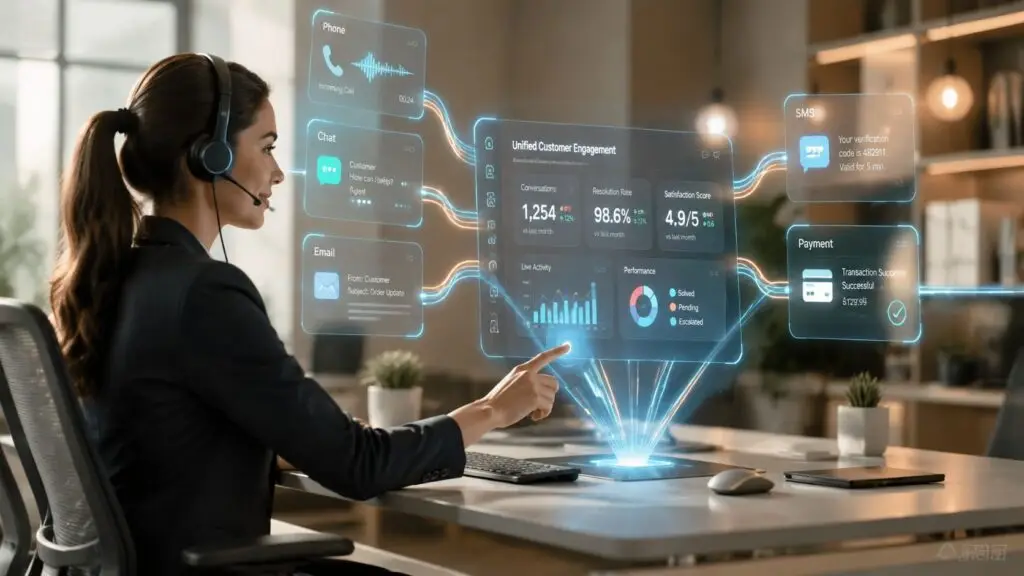
Intelligent Contacts helps regulated organizations bring authentication, communication, and payment into one controlled workflow. For collections, healthcare revenue cycle, financial services, insurance, government, and utilities teams, that means fewer handoffs, stronger compliance controls, and faster paths from verified contact to resolution. To see what voice biometrics authentication looks like inside a unified contact center and payments environment, Schedule a Demo or See Your ROI. Contact Intelligent Contacts at Intelligent Contacts to discuss your environment and implementation path.